
The Vana Foundation exists because data should belong to the people it came from.
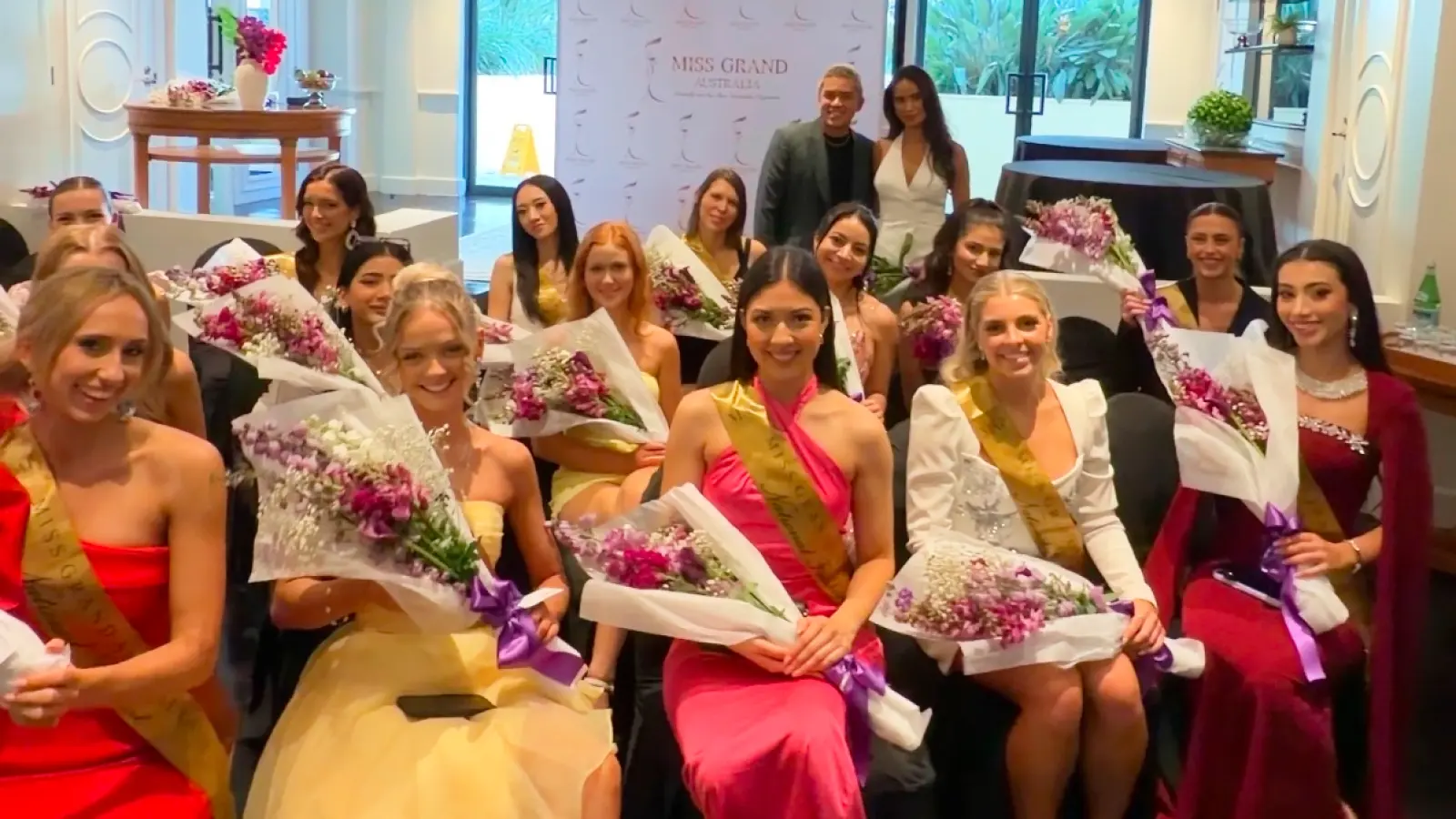
On June 19, Vana ran a workshop with Miss Grand Australia participants on AI, visibility, and what it means to be a public figure in the age of generative technology.
AI is a learnable skill. For women managing public profiles, building personal brands, and creating content as part of their professional role, these tools are already present whether they are being used intentionally or not. Read an email, write a caption, produce a content piece: almost anything you can brief a person on, you can brief AI on. The skill is the same. Be specific.
The risk
The same technology that drafts your caption can be used to generate an image of you without your knowledge or consent.
At its peak, Grok, the AI built into X, was generating sexualised images at roughly one every half-second. In under two weeks, more than three million such images circulated via the platform, including over 23,000 that appeared to depict children. Ninety-six percent of deepfake videos are pornographic. Ninety-nine percent of that targets women.
A system built on extracted data, weak consent frameworks, and platforms that moved faster than the law made this possible. In September 2025, Australia's eSafety Commissioner secured a $343,500 Federal Court penalty against Anthony Rotondo for posting deepfake images of high-profile Australian women, the largest civil penalty of its kind under the Online Safety Act. In March 2026, the Age-Restricted Material Codes came into force. In April 2026, UN Women's Tipping Point report documented the accelerating use of deepfake technology as a tool of gender-based violence, finding that coordinated harassment campaigns are increasingly amplified through AI. Regulation is moving. The technology is moving faster.

In the room
At the workshop, participants worked through what these systems actually do: how a generative model learns a face, why a public profile creates a specific kind of exposure, and what the data trail behind their online presence actually looks like. They ran a live demo, generating images of famous faces versus their own, watching the gap between the two in real time. They walked through the legal landscape: what eSafety can order, where enforcement stops, and what sits beyond its reach.
Why visibility is the exposure
Generative models learn from millions of image-and-text pairs, not storing individual photos but learning patterns across them. The more data that exists of a person, the more accurate a fake can be made of them.
For a pageant contestant, that data already exists publicly: recognised public identity, searchable image history, hundreds of high-quality photographs already in circulation. Taylor Swift, with every resource available to her, could not prevent what happened in January 2024. Visibility is not a shield.
And the data did not get there with meaningful consent. Almost every platform holds terms that let them change the rules whenever they like, with continued use counting as acceptance. Meta's global privacy director confirmed at an Australian Senate inquiry in September 2024 that the company had scraped every public post and photo Australians shared since 2007 to train its AI, with no opt-out available. Europeans got a choice. Australians did not. You cannot meaningfully consent to a technology that did not exist when you posted.
What participants left with
Enforcement has real limits. Penalties and binding codes create deterrence and legal recourse at the platform level. They do not remove images already in circulation, and they do not prevent a bad actor using a generative model offline.
"Our participants come from every background and walk of life. AI doesn't affect them all the same way, and that's why having Vana in the room matters. This kind of education, specific to who you are and what you're exposed to, is what makes the difference."
— Sophia Harris, National Co-Director, Miss Grand Australia
"The women I work with are building public profiles at exactly the moment this technology is becoming most dangerous. Vana helping them understand the system and take back control of their data can't come soon enough."
— Charlotte Allison-Bruce, Co-Director, Miss Grand Australia
Why data sovereignty is a women's issue
The Vana Foundation works across three channels: developing open tools that let people hold their own data and decide who can use it; building community around data ownership; and advocating for the rules and rights that make real consent possible.
"This isn't just a technology problem. The way AI is reshaping society is inseparable from who owns the data that powers it. That's why data ownership has to be part of this conversation from the start, not an afterthought."
— Art Abal, Managing Director, Vana Foundation
Women in public life bear that cost most directly. Data sovereignty means your data reaches AI systems because you chose that, revocably, on your own terms.
What comes next
The curriculum developed for June 19 will form the basis of a broader capacity building and safety programme Vana is rolling out across its community. If your organisation wants to bring AI education to the communities you work with, get in touch.
Sources
- Bloomberg, January 7 2026. Musk's Grok AI Generated Thousands of Undressed Images Per Hour on X; Center for Countering Digital Hate; Deeptrace, echoed in the International AI Safety Report 2025
- eSafety Commissioner, Federal Court penalty, Anthony Rotondo, September 26 2025. esafety.gov.au
- eSafety Commissioner, Age-Restricted Material Codes, in force March 9 2026. esafety.gov.au
- UN Women, Tipping Point: Online Violence Impacts, Manifestations and Redress in the AI Age, April 28 2026. unwomen.org
- Meta Senate inquiry, September 11 2024. innovationaus.com


